Demand for healthy ready-made solutions, such as healthy ready meals

Demand for healthy ready-made solutions, such as healthy ready meals, has grown exponentially in Italy and, even before that, abroad. This demand is driven by convenience as well as quality and wellbeing, without ever compromising on taste. So what does the Italian market currently offer for those who want balanced and nutritious ready meals delivered to their door? The trend for healthy ready meals: convenience and wellbeing delivered to your door
Today, the Italian market offers a wide range of healthy ready meals, designed for those who want to eat well even when they’re short on time.
The benefits of these solutions are clear:
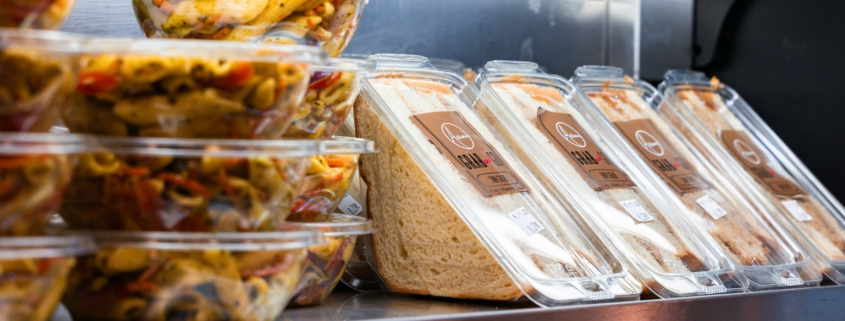
Ready-made meals, to be reheated in a few minutes in the microwave, oven or frying pan
Fresh, high-quality ingredients
Recipes designed to be light and balanced
The convenience of having everything delivered to your home or office
This includes protein-rich menus or options tailored for those following specific diets, featuring fresh, light dishes devised by nutritionists. The portions are balanced, ideal for those who want to eat well and control their calorie intake without sacrificing flavour.
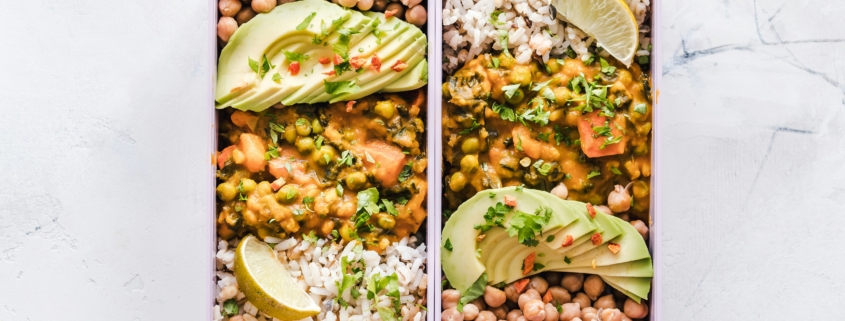
Protein-rich, vegetarian, low-carb and gluten-free dishes
Fresh ingredients with no preservatives
Delivery throughout Italy
Ready in 3 minutes, to be stored in the fridge
Ideal for those who want quick dinners, balanced meals and a healthy diet even on the busiest days.
 

Ready meals are gaining ground.

Ready meals are gaining ground.
Ready meals are growing in the retail sector, challenging traditional foodservice with their convenience and variety.
SURVEYS AND RESEARCH – In recent years, the ready-meal market has seen significant growth, blurring the lines between traditional catering and the retail sector. Supermarkets and other retail outlets are expanding their range of ready-to-eat foods, becoming genuine competitors to restaurants. This phenomenon, already well-established in other European countries, is also spreading in Italy, creating new business opportunities and changing consumer habits.

The growth of the ready-to-eat sector in Italy
According to data from Circana, reported by *Il Sole 24 Ore*, the ready-meal segment sold through retail channels in Italy reached a value of 2.5 billion euros, representing a 15.3 per cent increase compared with 2017. Despite this, the market share of the retail ready-to-eat sector stands at 3.5 per cent, below the European average of 5.5 per cent. Countries such as France (6.8 per cent), the United Kingdom (6.6 per cent) and Germany (5.8 per cent) show greater uptake of this trend. However, the Italian market has significant potential for growth, given that demand for ready meals is constantly expanding.

Consumers increasingly focused on convenience
The market’s evolution is driven by consumers’ growing desire for quick, convenient and affordable food options. The idea that ready meals are

Rising demand for convenience foods drives market growth

Rising demand for prepared foods is fueling market growth

Demand for prepared foods and convenience food products has grown rapidly, as they allow busy, busy workers to save time and effort. Millennials and Generation Z are driving the introduction of high-quality products thanks to their growing interest in innovative packaged foods. Furthermore, the increased demand for more premium and nutritious prepared foods has been specifically targeted at those who consider themselves “foodies.” Furthermore, the growing demand for prepared foods is enabling formulators to innovate based on customer trends with grab-and-go solutions that consumers can enjoy anywhere.

Increasing penetration of various food manufacturers is driving market growth

Ready-made meals represent an easy and convenient option for consumers with busy lifestyles who desire food choices that combine quality, flavor, nutrition, and hassle-free preparation. Health is the most significant trend after convenience, driving market innovation. Manufacturers are creating ready-made meals with ingredients that have explicit health benefits, such as antioxidants and oats. Given the growing consumer demand for prepackaged meals, manufacturers are currently launching natural and healthier ready-to-eat products. For example, in May 2024, Nestlé SA, a major food and beverage manufacturer, launched a new frozen food brand: Vital Pursuit. This brand offers products, including sandwiches, pizzas, and frozen meals, aimed at GLP-1 users and consumers aiming for weight loss and management. This increasingly consumer-centric development will drive growth in the global ready-to-eat market.

The ready-made meals market in Italy

In recent years, the ready-to-eat market for bars, pubs, and restaurants, as well as for private customers, has reached a turnover of several hundred million euros, approximately 390 million to be precise.

This has also led to a consequent increase in volumes, with a 6.9% increase in sales per package, for a total of 193.1 million packages sold.

Geographical Areas and Distribution Channels

The Northwest region is holding up the most geographically, accounting for 34.9% of the market and increasing by 10.1% in value and 6.3% per package. This is followed by the Northeast, which accounts for 25.8% of sales and recorded a 9.2% increase in value and 4.8% per package.

“Central and Southern Italy follow, with similar contributions to the performance,” shares Matilde Ciroldi of NIQ, “representing 22% and 17.3% of total turnover, respectively.

Among the distribution formats, supermarkets play a significant role, accounting for 40.4% of total turnover. Over the past year, this format exceeded €132 million, with growth of +11.2% in value and +6.3% per pack.

Within modern distribution, hypermarkets remain significant (+9.6% in value and +3% per pack), accounting for 24.1% of the market. Discount stores also make a significant contribution, a channel with a similar weight to hypermarkets (26%) and an increase of 10.7% in value and 11.1% per pack.”

Segment Trends

Within UHT ready meals, among the macro-segments, the largest contribution is made by other ready meals – a €74 million market – which in the last year grew by 20.1% in value and 12.2% per package thanks to the appetizers and salads sub-segment, which represents almost 17% of sales.

“Among the drivers that have driven this segment’s revenue growth (+30.4%),” Matilde Ciroldi continues, “is not only the increase in the average price for Italy as a whole (+10.6%, averaging €11.76/kg), but also the increase in promotional pressure, which has reached 28.1% for Italy as a whole, growing strongly across all modern distribution channels.

Beyond price and promotions, the increase in appetizers and salads is also due to the increase in offerings, i.e., the average number of items sold per store (4.1 for Italy as a whole, +0.6 points), especially in hypermarkets but also in supermarkets.

The second-highest contributor to performance is first courses (+6.3% in value and +5.5% in packs), which in the last year achieved a turnover of almost €210 million, primarily thanks to foreign specialties (+7.3% in value and +7.4% in packs). conf.), demonstrating that international and ethnic products no longer represent a trend, but a new eating habit of Italian consumers”

The evolution of self-service restaurants with ready meals

The Success of Smart Restaurants

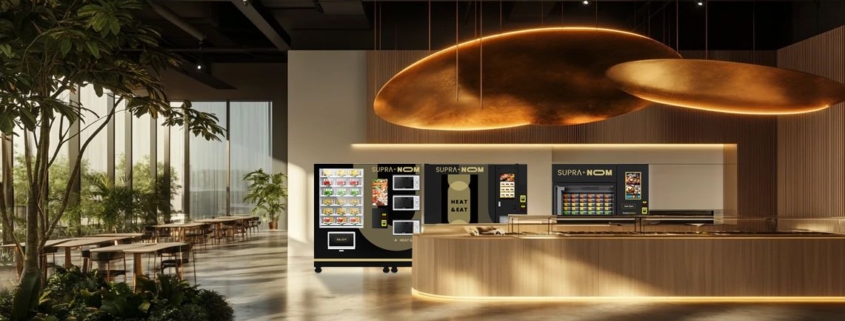
The potential of smart vending machines is rapidly expanding, offering healthy alternatives to the ubiquitous junk food dispensing machines. Leveraging their technology while completely rethinking their offerings, I-Eat, one of the first Italian projects of its kind, was founded in Naples in 2018, initially targeting offices, hotels, gyms, and all those spaces shared by a community of people who spend a good portion of their day away from home.

The idea? To provide them with vending machines selling fresh food designed to be consumed within two days of preparation and manageable by users via an app.

With the pandemic, everything has changed over the past year. The decline in social interaction—and the places dedicated to cultivating it—has led I-Eat to rethink its core business, while maintaining the quality of its offerings focused on healthy food.

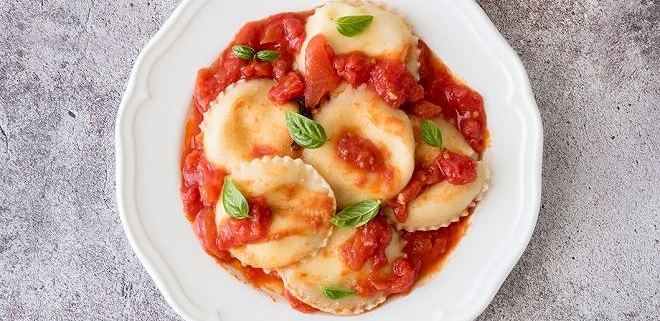
Caprese ravioli

Ravioli caprese are a typical first course of Mediterranean cuisine, specifically originating from the island of Capri, from which they take their name. They are characterized by a fresh pasta made from flour, water, and oil, and a filling of cow’s milk caciotta cheese and marjoram. This dish is known for its extraordinary flavor and traditional preparation, which includes a fresh tomato sauce. The recipe was created by chef Domenico Pastena, winner of the 2025 Handmade Pasta Championship, and stands out for its authenticity and the presence of typical ingredients from Campania cuisine.

Ravioli capresi are the signature dish of the island of Capri: delicious pasta buttons filled with caciotta cheese and marjoram. The secret to this specialty lies in the quality of the pasta: tradition dictates that they be served with plenty of fresh tomato sauce, or plain and topped with ragù only.

There’s also a less famous version made with lemon, using Amalfi lemons.

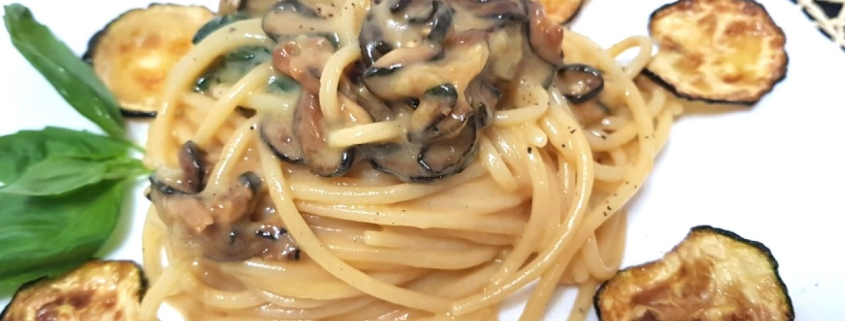
Spaghetti alla Nerano or alla Maria Grazia

Spaghetti alla Nerano is a typical Campanian dish, made with fried zucchini and Provolone del Monaco cheese.
This recipe was invented in the 1950s in the bay of Nerano, a hamlet of Massa Lubrense.
The spaghetti is seasoned with fresh mint for a unique, creamy flavor, making it a highly popular first course.

The Neapolitan Genoese

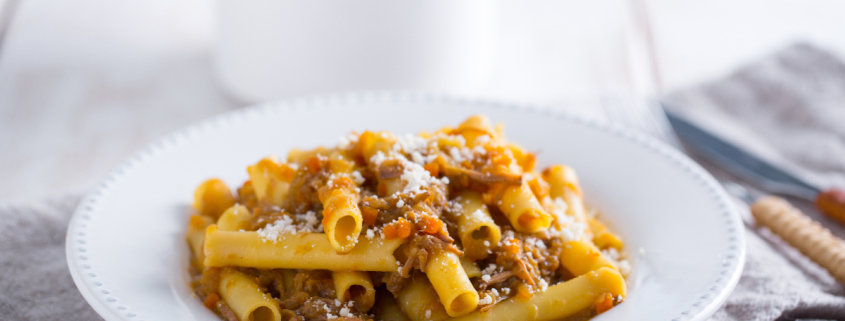
Pasta alla Genovese is a typical Neapolitan first course, prepared here with broken ziti and a white ragù made with beef muscle and lots of thinly sliced ​​golden onions. These onions, breaking down during cooking, form a creamy and fragrant purée perfect for wrapping the pasta.